


· By Aussie Biltong
Grass-Fed Beef Biltong: The Clean Protein Snack, Explained

Open the average snack drawer in an Australian office and you will find a pile of half-eaten protein bars, a packet of jerky stiff with sugar and soy sauce, and a bag of chips that vanished in nine minutes flat. The wrappers all promise the same thing. Energy. Performance. Clean fuel. Read the back of the pack and the story falls apart.
Sugar. Glucose syrup. Soy protein isolate. Maltodextrin. Natural flavours, which by law can mean almost anything. You went looking for protein. You walked out with a bag of seasoned starch.
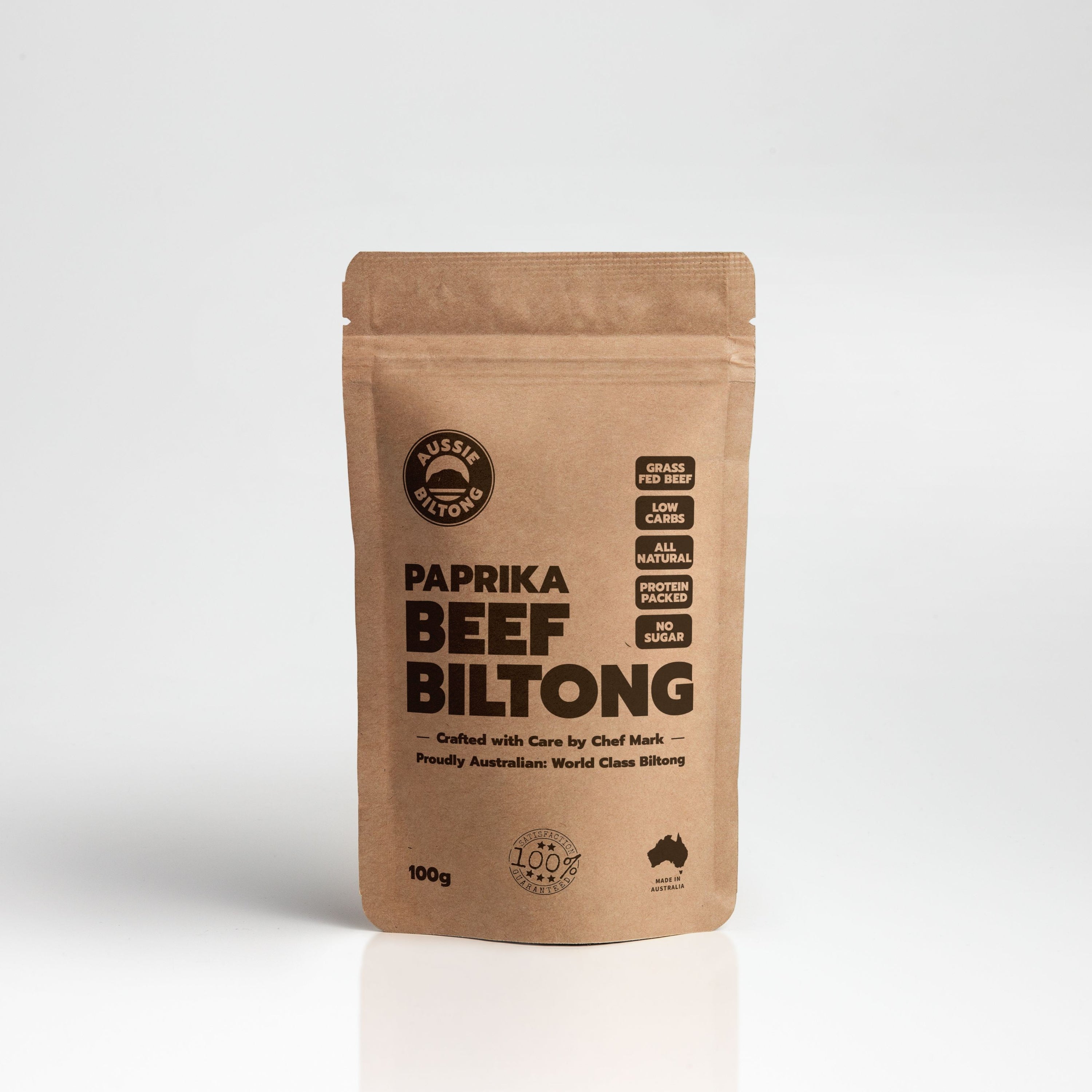
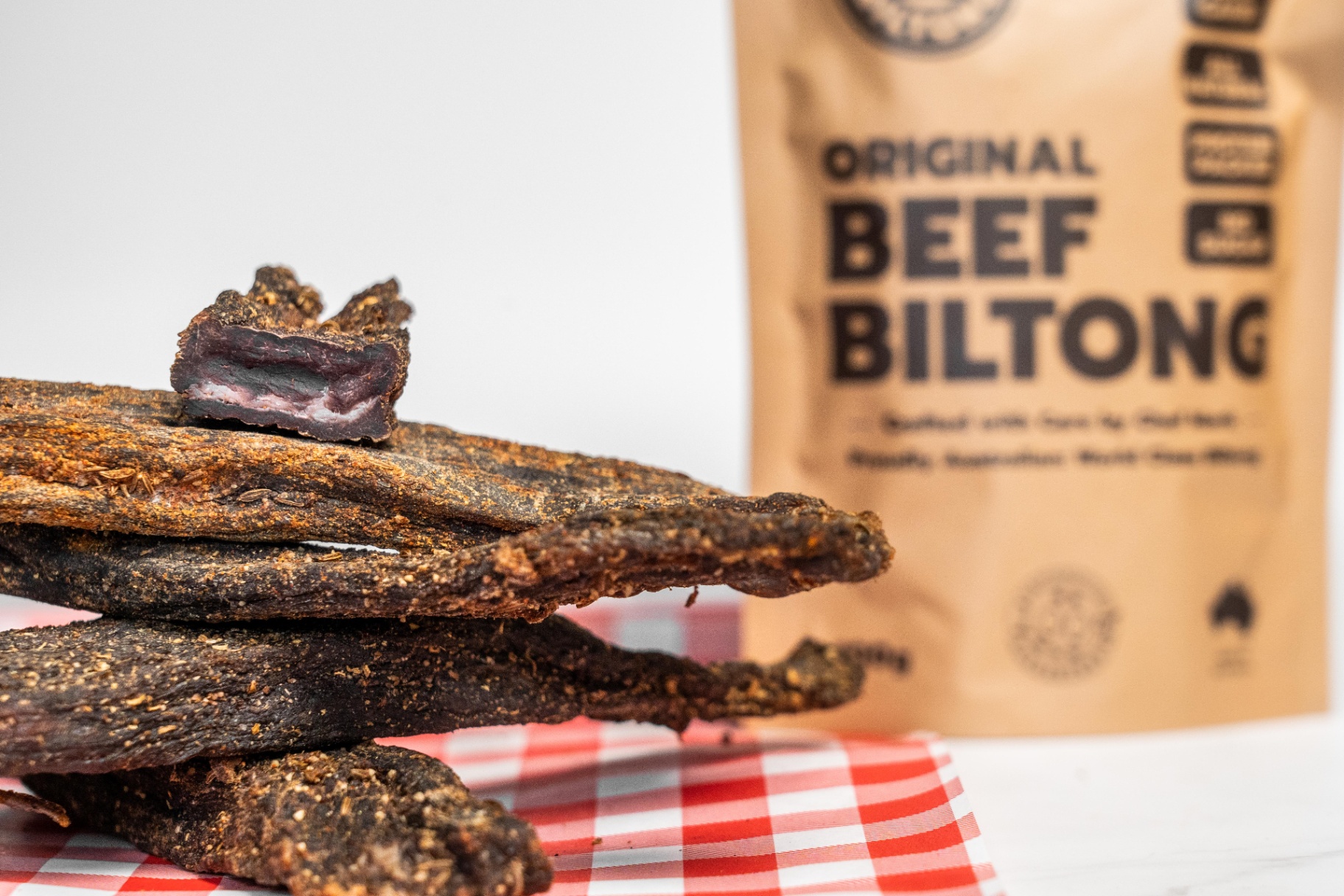
Grass-fed beef biltong is the snack that cuts through the noise. One ingredient does the work. The rest is salt, vinegar, and spice. No sugar. No preservatives. No fillers pretending to be food. Aussie Original Beef Biltong is the version that started this brand. Aussie Paprika Beef Biltong is the smoked-pepper variant for people who want a bigger flavour profile. Same five-ingredient label.
What clean eating actually means in 2026
Clean eating gets thrown around so often it has lost its edge. Strip it back to its useful definition and it means this. You can read every ingredient on the label and you know what each one is.
On most jerky packets, half the ingredient list reads like a chemistry exam. Sodium nitrite. Sodium erythorbate. Hydrolysed soy protein. These are not bad people sneaking nasty things into your food. They are shelf-life additives, doing the job of stretching a perishable product into a 12-month supermarket SKU.
Grass-fed beef biltong does not need them. The traditional South African slow-drying method removes water until bacteria cannot grow. The vinegar drops the pH. The salt finishes the job. That is the preservation system. We covered the full chemistry in our piece on how traditional slow-drying works. It has worked for two hundred years and it works now.
Why grass-fed matters more than the marketing makes out
Most beef in Australian supermarket snacks comes from grain-finished cattle raised in feedlots. That is not a moral judgement. It is a nutritional one. Grain-fed and grass-fed beef are not the same product.
- Grass-fed beef has up to five times the omega-3 content of grain-fed beef.
- It carries roughly twice the conjugated linoleic acid (CLA), which is linked to better body composition.
- It contains significantly more vitamin E and beta-carotene.
- The fat profile is leaner and the marbling is different. You can see it. Grass-fed fat is yellower, denser, and tastes like real beef.
This is not nostalgia. It is what cattle eat when they live the way nature designed them. Open pastures, slow growth, no antibiotics added to feed troughs to prop up the system.
The numbers on a 50g serve of grass-fed beef biltong
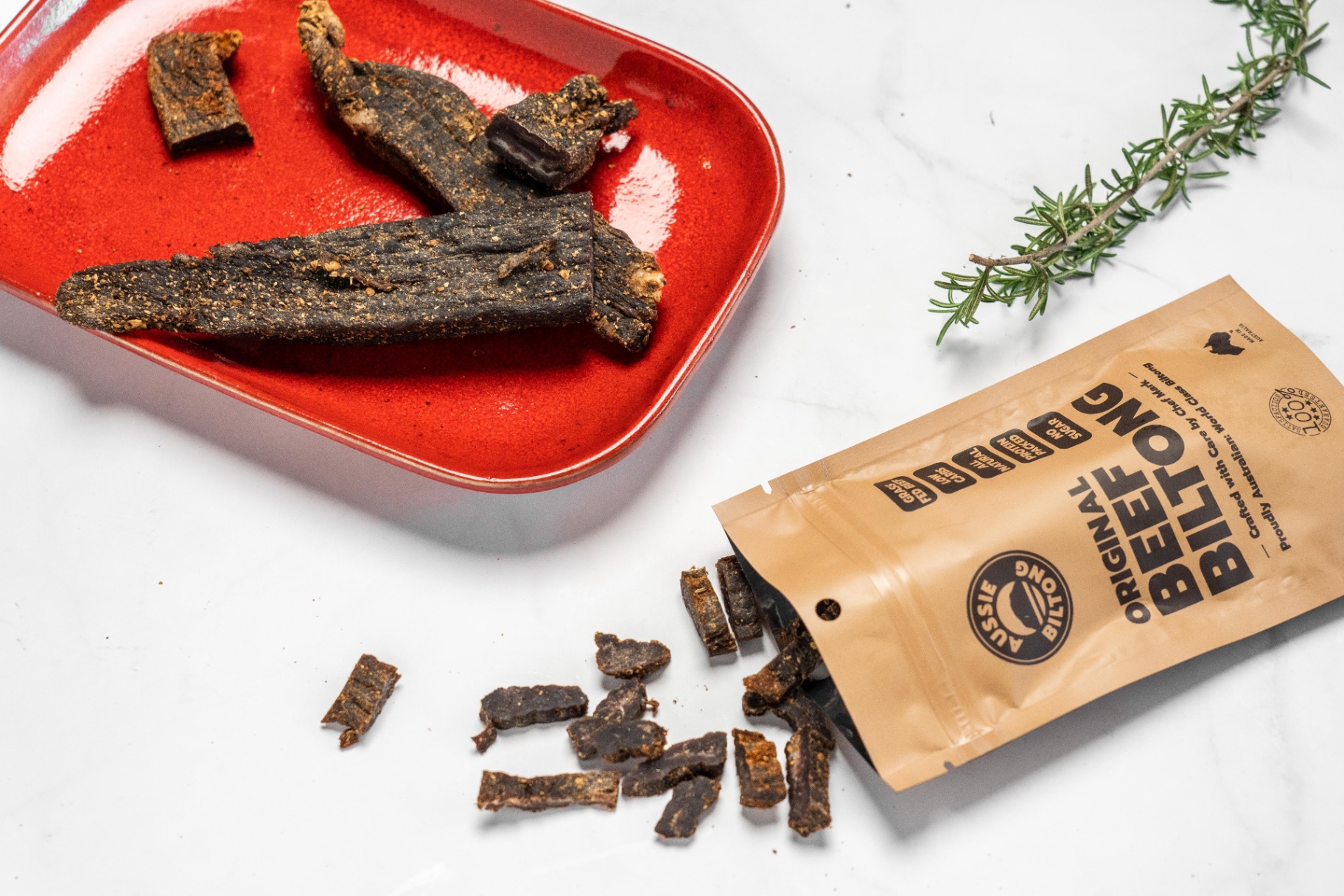
Most clean protein snack claims are vague. Here is what a 50g serve of Aussie Biltong Original actually delivers.
- Around 30g of complete protein, all nine essential amino acids
- Under 2g of carbohydrate. No added sugar. No glucose syrup.
- Naturally occurring iron, zinc, B12 and creatine
- No nitrates, nitrites, MSG, or preservatives
- Single-digit ingredient list. Beef. Vinegar. Salt. Coriander. Black pepper.
Compare that to a typical serve of mainstream beef jerky. Similar protein, plus 6 to 9g of sugar, soy protein filler, and preservatives doing the heavy lifting. You are paying for protein and getting half a lolly.
Biltong vs the rest of the high protein beef snack aisle
Stack a packet of grass-fed beef biltong against the snacks it competes with and the gap is honest.
- Protein bars. Most run 12-20g of protein with 8-15g of sugar and a list of ingredients longer than this paragraph. Many use whey protein concentrate, which is fine, but the carrier is usually a blend of glucose syrup and soy.
- Beef jerky. Same headline protein number as biltong. Then add sugar, soy sauce, Worcestershire sauce, and preservatives.
- Crackers and dips. The protein number on the box refers to the dip. The crackers are wheat. You are eating bread.
- Trail mix. Real food, but the protein-to-calorie ratio is poor and the nut and seed oils oxidise quickly.
Biltong wins on three axes that matter for a clean protein snack. Highest protein density per gram. Shortest ingredient list. Longest shelf life without chemical preservatives. We did the deeper head-to-head with protein bars in our breakdown of what 7 Aussies found when they swapped protein bars for biltong.

When grass-fed biltong actually fits your day
Theory is easy. Here is where biltong earns its place in real Australian eating.
Pre-gym at 5:30am
You do not want to train fasted but you do not want to eat a meal either. A 50g serve of Aussie Original Beef Biltong gives you around 30g of fast-acting protein and zero gut discomfort. No bloating. No sugar spike crashing mid-set.
Office desk at 3pm
The 3pm slump is a blood sugar event. A muesli bar feeds it. Biltong does not. You eat protein, your insulin stays calm, and you make it to dinner without a meltdown.
School pickup, kids in the car
Kids will eat biltong. They will eat it in the car. They will not get jam hands. The packet will not explode. There is no sugar to argue about.
Long-haul flights
Cabin food is engineered for shelf life, not nutrition. Biltong travels in carry-on, packs flat, and fills the gap between two unwanted meal trays.
Hiking and camping
Calorie-dense, protein-dense, no refrigeration required, no plastic packaging that puffs up at altitude. The product was invented for this exact use case. We pulled together the rest of the trail-friendly options in our guide to the best hiking and camping snacks.

The "processed meat" objection, addressed
Someone, somewhere, is going to tell you biltong is processed meat and therefore the same as a hot dog. They are wrong but the objection is worth answering properly.
Processed meat in the World Health Organisation classification refers to meat preserved by smoking, curing, salting, or the addition of chemical preservatives. Bacon. Frankfurters. Salami. Most supermarket jerky. The health concerns the WHO raised relate specifically to nitrates, nitrites, and the heterocyclic amines and polycyclic aromatic hydrocarbons formed when meat is smoked or charred at high temperatures.
Traditional slow-dried biltong is not smoked. It is not charred. It is not heated above 25°C. It contains no added nitrates, no nitrites, no chemical preservatives at all. The preservation comes from removing water and acidifying with vinegar. The chemistry the WHO flagged simply is not in the product.
If you want the long version of the health question, our nutritionist broke down all the surprising benefits of biltong in a separate piece on biltong and weight management.
How Aussie Biltong is made (the short version)
Seven to fourteen days. Vinegar bath, hand-applied salt and spice, hung in a temperature- and humidity-controlled drying cabinet and flipped every few hours so it dries evenly. No heat. No smoke. No additives. The window is a range rather than a fixed number because airflow direction and intensity change how quickly the moisture leaves the meat, so a batch comes out when the texture is right rather than when a clock says so. The full process, including the science of water activity and pH, is in our explainer on how traditional slow-drying works. For the meat we start with, see our guide to choosing the right cut of beef for biltong.
Why we made Aussie Biltong this way
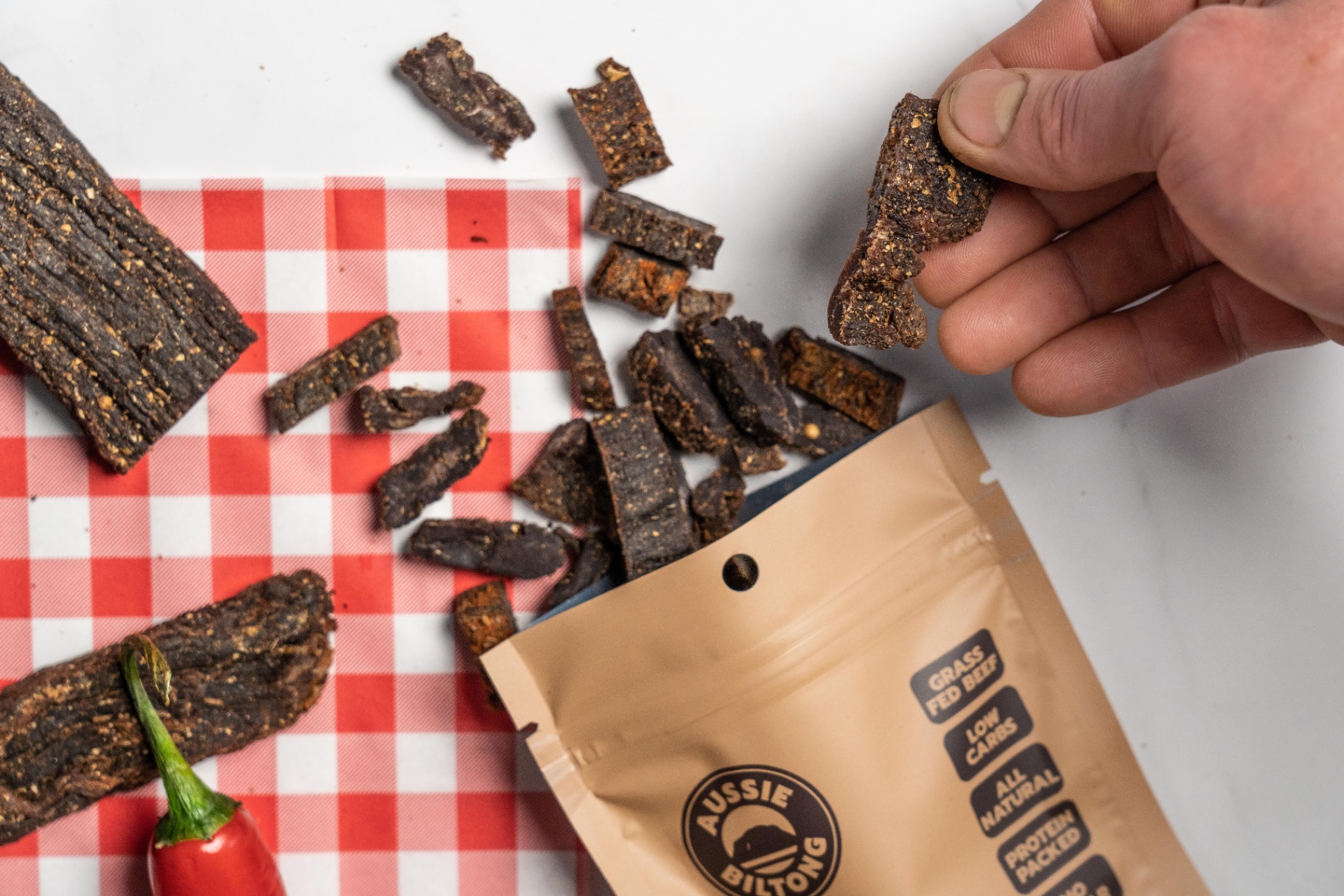
Grass-Fed Aussie Beef Biltong. Made by Chef Mark's secret recipe. Our 7 to 14 day slow-dry method.
We chose grass-fed because there is no point making a clean protein snack on top of a compromised raw ingredient. Vacuum-sealed when it leaves us. Shipped free express anywhere in Australia on orders over $150.
Two flavours. Original for the traditional coriander-pepper-vinegar profile. Paprika for smoked paprika, garlic, and a heavier pepper hit.
Nine sizes across both flavours: 100g, 250g, 500g, 750g, 1kg, 1.25kg, 1.5kg, 1.75kg and 2kg. Every size above 250g ships as multiple resealable 250g pouches, so a 1kg order arrives as four sealed pouches and a 2kg as eight. Only the one you are eating is ever open.
| Size | Price | Price per kg |
|---|---|---|
| 100g | $18.00 | $180.00 |
| 250g | $34.99 | $139.96 |
| 500g | $64.99 | $129.98 |
| 750g | $92.99 | $123.99 |
| 1kg | $114.99 | $114.99 |
| 1.25kg | $139.99 | $111.99 |
| 1.5kg | $164.99 | $109.99 |
| 1.75kg | $189.99 | $108.57 |
| 2kg | $215.99 | $108.00 |
New customers can use BILTONGDEAL for 10% off a first order, which is the cheapest way to find out if a clean protein snack actually tastes like food. Browse the full range here.
FAQ
Is grass-fed beef biltong actually healthier than jerky?
Yes, on the metrics that matter. Higher omega-3, no added sugar, no preservatives, complete protein. The headline protein number is similar. The rest of the label is not.
How much grass-fed beef biltong should I eat per day?
A 50g serve gives you around 30g of protein. Most adults can comfortably eat 50g a day as a snack alongside normal meals. Treat it like any high-protein food. Drink water with it.
Is biltong keto and paleo friendly?
Aussie Biltong is. Both flavours are zero added sugar, zero seed oils, single-ingredient meat with traditional spice. Check the label of any biltong before you buy. Some brands add sugar to the marinade.
Is biltong a clean protein snack for kids?
Yes, for kids old enough to chew it safely (typically 4+). It is a single-ingredient real food with no sugar, no preservatives, and no allergens beyond beef itself. Check serve size, biltong is salt-cured, so smaller portions for smaller bodies.
Where does the grass-fed beef in Aussie Biltong come from?
100% Australian grass-fed beef from local farms. We work with suppliers we know by name. No imported meat ever.