


· By Aussie Biltong
Choosing Meat for Biltong: Best Cuts, Tips & Alternatives
Aussie biltong starts with great meat. The right cut of meat makes the difference between tender, flavour-packed slices and a batch that’s tough, bland, or spoils too quickly. Whether you’re chasing that traditional biltong flavour or experimenting with new spices like coriander, choosing meat for biltong carefully is where it all begins.
Why Meat Choice Matters
Picking the best meat for biltong is just as important as your spice mix or drying setup. The cut, leanness, and grain direction all affect the final result texture, chewiness, and flavour.
Choosing meat for biltong with a defined grain also makes it easier to slice and gives you that classic steak-like chew that separates biltong from jerky.
Best Beef Cuts for Biltong
Silverside (Bottom Round)
Silverside is hands-down the best beef meat for biltong. It’s lean, easy to marinate, and slices evenly along the grain. Once slow-dried, it gives that unmistakable biltong flavour: firm, meaty, and full of character.
Topside (Top Round)
Another excellent cut of meat for biltong. Topside is tender, lean, and needs very little trimming. It’s ideal if you want a softer chew but still want a clean, beefy taste. It’s also the cut we use for every batch of Aussie Biltong.
Eye of Round
Eye of round is ultra-lean and perfectly shaped for consistent strips. Just slice carefully this cut can dry fast. Get it right and you’ll have beautifully uniform, lean biltong every time.
Rump (Sirloin)
Rump is slightly more marbled, giving a richer steak-like taste. Trim off the excess fat, marinate well, and you’ll get a bolder, more indulgent biltong flavour.
Comparison of Round Cuts
|
Cut |
Tenderness |
Leanness |
Cost |
Ease of Slicing |
|
Silverside |
Medium |
High |
Affordable |
Easy |
|
Topside |
Medium-High |
High |
Affordable |
Easy |
|
Eye of Round |
Firm |
Very High |
Mid-range |
Precise slicing needed |
|
Rump |
Medium |
Medium-High |
Mid-range |
Moderate |
How much meat you actually need
This surprises almost everyone the first time. Roughly 3kg of raw beef becomes 1kg of finished biltong, because about 65% of the starting weight leaves as moisture during drying. So if you want a kilo of biltong at the end, you are buying three kilos of topside at the start.
That yield is the single biggest driver of what biltong costs, and it is worth understanding before you decide whether to make it or buy it. We put the full breakdown together in what biltong should actually cost per kg in Australia, including the four things that drive the price and how to spot when you are being overcharged for something inferior.
Alternative Meats for Biltong

Game Meats (Kudu, Springbok, Ostrich)
Game meats are naturally lean, making them some of the best meat for biltong if you want a wild, earthy flavour. Their low fat content means they slow-dry beautifully.
Poultry & Fish (Chicken, Turkey, Salmon)
Chicken breast and turkey can work, but make sure to marinate thoroughly and dry under safe conditions. Salmon produces a unique, softer texture almost like a fish jerky but must be eaten quickly.
Cuts to Avoid and Why
Ribeye
Delicious as a steak, but too fatty for biltong. The marbling leads to spoilage and ruins shelf life.
Brisket
Brisket needs heavy fat trimming, which makes it a poor choice when choosing meat for biltong. Even after trimming, it may dry unevenly.
Other Fatty Cuts
Any cut with thick fat caps or heavy marbling should be avoided. Excess fat slows curing, stops the drying process from working evenly, and risks mould growth.
How to Prepare and Slice Meat for Biltong
 Trimming Fat
Trim off visible fat until the meat is as lean as possible. This step is key for lean biltong that stays fresh longer.
Cutting with the Grain
Always slice with the grain for that iconic biltong chew. Against-the-grain cuts create a texture closer to steak or jerky... not bad, but not traditional.
Ideal Thickness & Uniformity
Stick to 6–10 mm thickness for even drying. Consistency is everything, thin pieces over-dry, thick ones stay too wet in the centre.
Buying Tips: Where to Source Quality Meat
 Grass-fed vs. Grain-fed
Grass-fed beef delivers deeper flavour and slightly better nutritional value, while grain-fed beef is softer and has more fat. For biltong, grass-fed often wins for its lean profile and strong biltong flavour.
Local Butchers vs. Supermarkets
Butchers are the best source if you’re serious about making biltong. They’ll help you find the best beef meat for biltong, cut it to your specs, and give tips on how to slice and marinate. Supermarkets can work in a pinch but often limit your choice of cut.
Making it versus buying it
Choosing meat for biltong is the most important step in the process. Go for lean cuts like silverside or topside, slice them evenly, marinate with coriander and vinegar, and slow-dry until perfect. Whether you stick with beef or try game meat or poultry, starting with the right cut of meat is the key to getting that authentic, mouth-watering biltong flavour every time.
Worth being realistic about the rest of it though. After the cut comes 7 to 14 days of drying at around 20-25°C, flipped every few hours, in a setup that holds temperature and airflow steady. Airflow direction and intensity change how fast the moisture leaves, so two batches hung on the same day can finish days apart. It is done when the texture is right, not when a timer says so, and judging that takes a few attempts.
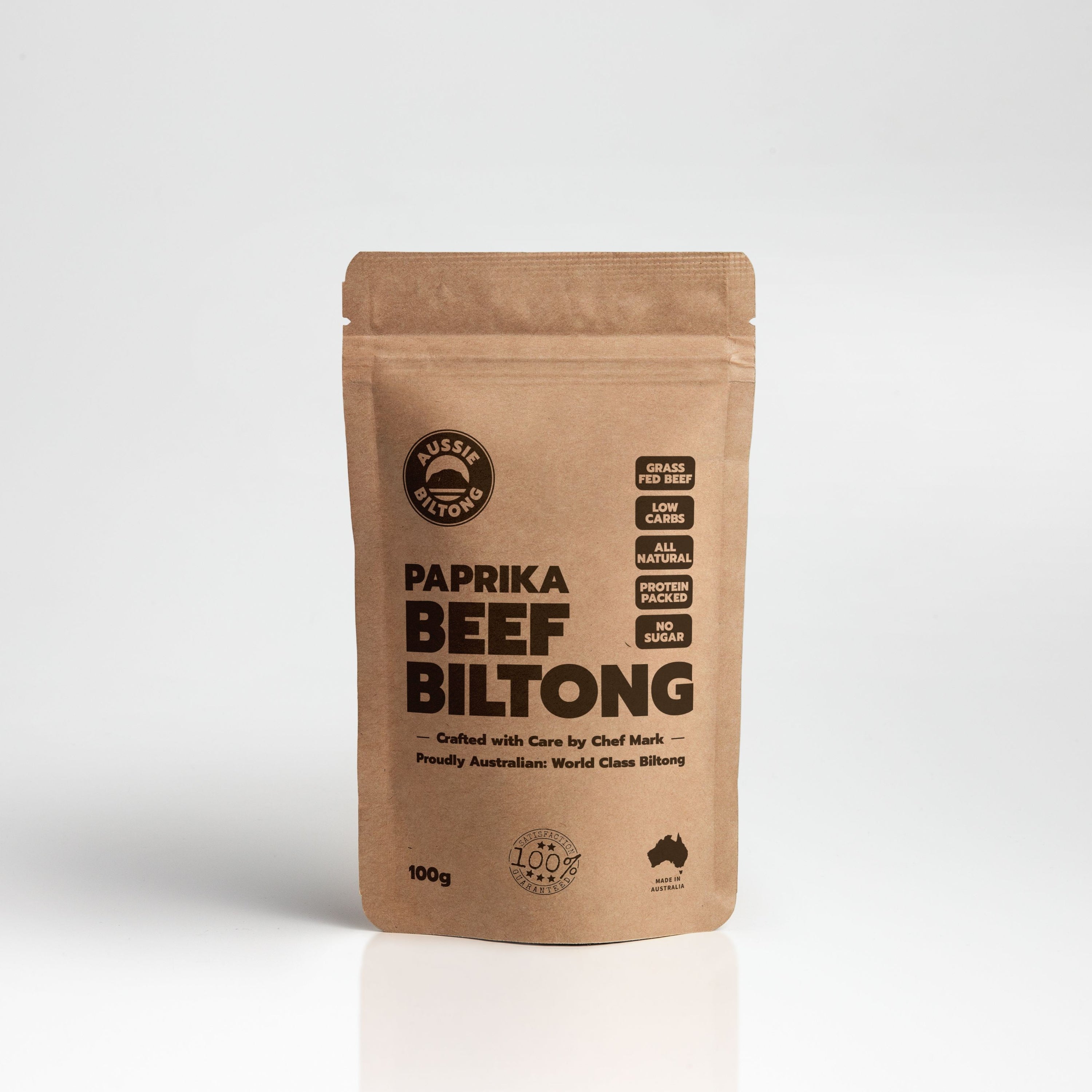
If you would rather skip that part, ours is made from Australian grass-fed topside and slow-dried the same way. Original is the traditional coriander, pepper and vinegar cure. Paprika adds smoked paprika and garlic. Five ingredients, no sugar, no preservatives, and a 100% money-back guarantee if you are not 100% satisfied. Browse the range here.