


· By Chef Mark
Biltong Potjie: The Traditional South African Stew You Never Stir
A potjie is not a stew you rush. It is a cast iron pot over coals, a long afternoon, and a rule that everyone repeats and nobody quite obeys: you do not stir a potjie.
The ingredients go in layers and stay in layers. The steam does the work. What you get at the end is a dish where every component has cooked in the flavour of the one above it, without turning into a uniform brown mush.
Adding biltong is not traditional in the strictest sense, but it is common in South African homes and it does something no other ingredient does. Dropped in near the end, it rehydrates in the liquid and releases concentrated beef and coriander back into the pot. It is a shortcut to depth that would otherwise take another two hours.
What you need
A number 3 potjie pot (about 6 litres) feeds six to eight. A heavy cast iron Dutch oven on the stovetop works fine if you do not have a potjie, and the method is the same.
Ingredients
Serves 6 to 8.
- 1.2kg beef chuck or shin, cut into 4cm cubes
- 2 tbsp oil or beef dripping
- 2 onions, sliced thick
- 4 garlic cloves, crushed
- 2 carrots, cut into chunks
- 500g baby potatoes, halved if large
- 200g button mushrooms
- 1 red capsicum, cut into strips
- 400g tin chopped tomatoes
- 250ml beef stock
- 125ml red wine (optional but recommended)
- 2 bay leaves
- 1 tsp whole coriander seeds, lightly crushed
- Cracked black pepper
- 150g biltong, roughly chopped
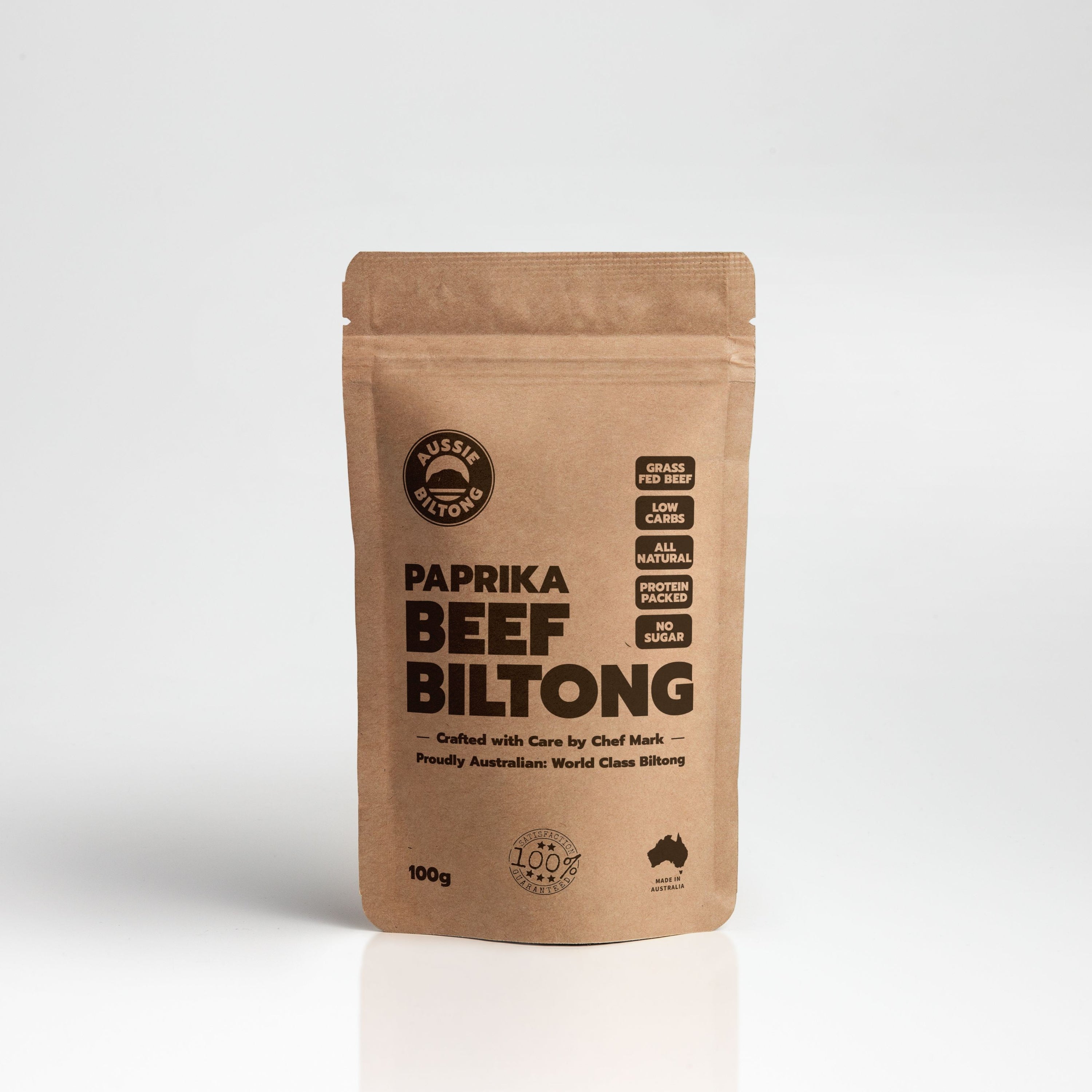
Original is the traditional choice, since the coriander in the cure echoes the coriander seed in the pot. Paprika gives a smokier, slightly warmer result that suits a cold night.
Method
- Get the coals right. You want a steady, moderate heat, not a roaring fire. Coals should be grey and glowing. If you are indoors, low heat on the stovetop.
- Brown the beef. Heat the oil in the pot and brown the beef in batches. Do not crowd it, or it steams instead of browning. Set aside as each batch is done.
- Soften the onions. Add the onions to the same pot and cook until golden, around 8 minutes. Add the garlic for the last minute.
- Start layering. Return the beef to the pot on top of the onions. Then layer, in this order and without mixing: carrots, potatoes, mushrooms, capsicum.
- Add the liquid. Pour the tomatoes, stock and wine gently down the side of the pot. Tuck in the bay leaves and scatter the crushed coriander seed and pepper over the top.
- Lid on. Do not stir. This is the whole discipline of a potjie. Leave the lid on and let it cook for 2.5 to 3 hours. Resist lifting it more than once or twice.
- Add the biltong in the last 30 minutes. Scatter the chopped biltong over the top and replace the lid. It will soften in the steam and release its flavour down through the pot. Adding it earlier makes it disappear entirely.
- Check the beef. It should fall apart under a fork. If not, give it another 30 minutes.
- Serve straight from the pot with rice, pap, or crusty bread. Only now do you stir, and only to serve.
Why you do not stir a potjie
Worth understanding rather than just obeying. Layering means the potatoes steam in the liquid rising from the beef, the mushrooms cook in the steam off the potatoes, and so on up the pot. Stirring collapses that into one homogeneous braise.
It also means the vegetables at the top stay intact rather than breaking down. A potjie should look like distinct ingredients when you serve it, not like a soup.
Tips from the kitchen
- Do not salt until the end. Stock, tinned tomato and salt-cured biltong all bring salt. Taste at the end and adjust then.
- Layer hardest to softest, bottom to top. Carrots and potatoes go low, delicate things like capsicum go high.
- Biltong goes in last. Thirty minutes is the sweet spot. Any longer and it dissolves into the sauce, which is not a disaster but you lose the texture.
- Better the next day. Like most braises, it improves overnight. Reheat gently.
- No potjie pot? A heavy Dutch oven on the lowest stovetop setting, or 150°C in the oven, works well. The layering principle still applies.
About the biltong going in
Ours is Australian grass-fed topside, slow-dried over 7 to 14 days and flipped every few hours so it dries evenly. The window is a range because airflow direction and intensity change how quickly the moisture leaves, so a batch comes out when the texture is right rather than when a clock says so. That slow cure is why it rehydrates into a potjie so well: it is concentrated beef, not cooked beef.
Five ingredients: beef, vinegar, salt, coriander, black pepper. No sugar, no preservatives. Every size ships as resealable 250g pouches, so a 1kg order arrives as four sealed pouches. Browse the range here. Free express delivery Australia-wide on orders over $150.
One-off orders get 5% off automatically. Subscribe and it is 10% off every order, for as long as you stay, no obligation, cancel anytime. And if you are not 100% satisfied, we offer a 100% money-back guarantee.
FAQ
What is a potjie?
A traditional South African stew cooked slowly in a three-legged cast iron pot over coals. Ingredients are layered rather than mixed, and the pot is not stirred during cooking, which keeps each component distinct.
Why add biltong to a potjie?
Biltong is concentrated beef, roughly 3kg of raw meat reduced to 1kg. Added near the end it rehydrates and releases deep beef and coriander flavour back into the pot, giving you depth that would otherwise need hours more cooking.
When should I add the biltong?
In the last 30 minutes. Earlier and it dissolves completely into the sauce and you lose the texture entirely.
Can I make a potjie without a potjie pot?
Yes. A heavy cast iron Dutch oven works well, either on the lowest stovetop heat or at 150°C in the oven. Keep the layering and keep the lid on.
Can I make it ahead?
It is arguably better the next day. Cool it, refrigerate, and reheat gently. Add the biltong on reheating if you want the texture to stay pronounced.