


· By Chef Mark
Biltong and Cheese Muffins: The Easiest Savoury Bake You'll Make
Ask anyone who grew up in South Africa what gets made when biltong is in the house and there is a decent chance the answer is muffins.
Salty, cheesy, studded with beef, still warm from the oven. They turn up at school fetes, rugby mornings, and on the side of a bowl of soup. They are also one of the easiest things you can bake, because muffins are forgiving in a way most baking is not.
One bowl, no mixer, about half an hour start to finish. Twelve of them.
Why biltong works in baking
Bacon is the usual choice for a savoury muffin, and it has a problem: it releases fat and water as it bakes, which makes the crumb greasy and heavy.
Biltong does the opposite. It has already lost about 65% of its weight as moisture during the slow-dry, so it goes into the batter dry and stays that way. You get concentrated beef flavour without wetting the mix. The salt and coriander distribute through the whole muffin rather than sitting in pockets.
It also means you need less of it. 150g of biltong carries a batch of twelve comfortably.
Ingredients
Makes 12 muffins.
- 150g biltong, finely chopped
- 2 cups (300g) self-raising flour
- 1 cup (120g) cheddar, grated, plus extra for the tops
- 1 cup (250ml) milk
- 2 eggs
- 60g butter, melted and slightly cooled
- 1 tsp baking powder
- ½ tsp cracked black pepper
- A small handful of chives or spring onion, chopped (optional)
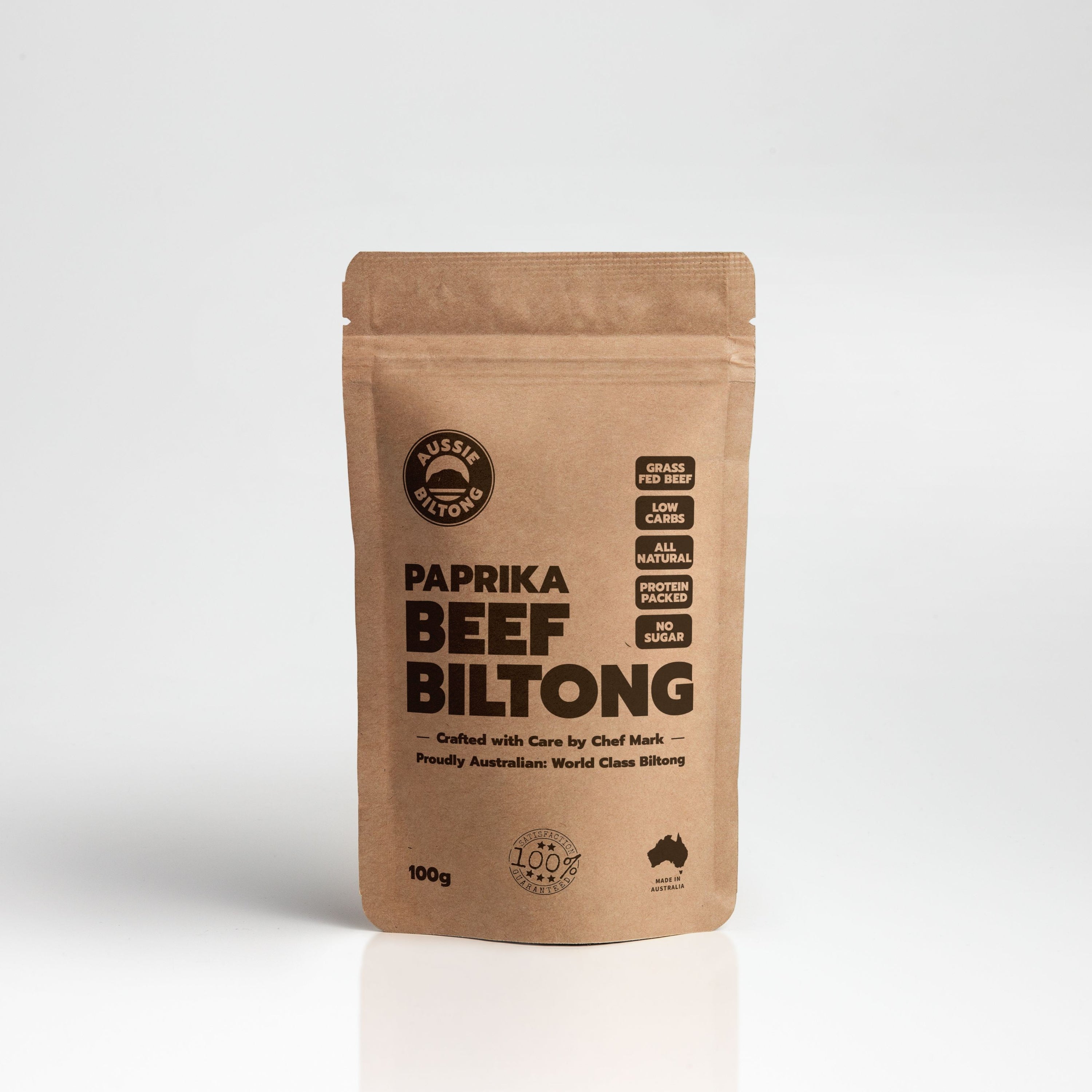
Original is the safer choice here, since the coriander and pepper sit well against cheddar. Paprika makes a bolder muffin with the smoked paprika coming through, which works if you are serving them alongside soup.
Method
- Heat the oven to 200°C (180°C fan). Line a 12-hole muffin tin with paper cases or grease it well.
- Chop the biltong finely. Aim for pieces around 5mm. Bigger than that and they sink to the bottom. A sharp knife on a board works better than scissors.
- Dry ingredients first. In a large bowl, combine the flour, baking powder, pepper, grated cheddar and chopped biltong. Toss it all together so the beef and cheese are coated in flour, which stops them sinking.
- Wet ingredients. In a jug, whisk the eggs, milk and melted butter together.
- Combine, but barely. Pour the wet into the dry and fold with a spoon until just combined. The batter should still look lumpy. This is the one step that matters. Over-mixing develops the gluten and gives you tough, rubbery muffins.
- Fill and top. Spoon into the cases, about three-quarters full. Scatter a little extra cheddar over each one.
- Bake for 20 to 25 minutes, until risen, golden, and a skewer comes out clean.
- Cool for 5 minutes in the tin, then move to a rack. Best eaten warm.
Tips from the kitchen
- Do not add salt. Between the biltong and the cheddar there is plenty. Adding more is the most common way people ruin these.
- Lumpy batter is correct. If your batter looks smooth, you have mixed too much. Stop earlier than feels right.
- Coat the add-ins in flour. Tossing the biltong and cheese through the dry mix before adding liquid is what keeps them suspended rather than sitting in a layer at the bottom.
- Freezing. They freeze well for up to three months. Reheat from frozen at 160°C for about 10 minutes and they come back almost like fresh.
- Lunchboxes. These hold up all day without refrigeration, which makes them one of the better savoury lunchbox options going.
Variations worth trying
- Biltong and feta. Swap half the cheddar for crumbled feta. Sharper, saltier, very good.
- Add corn. A cup of drained sweetcorn adds sweetness that plays nicely against the salt.
- Jalapeño and biltong. A finely chopped jalapeño turns these into something you would happily serve with beer.
- Mini muffins. Same batter, 12 to 15 minutes, makes around 24. Better for parties.
Making them with our biltong
Ours is Australian grass-fed topside, slow-dried over 7 to 14 days and flipped every few hours so it dries evenly. The window is a range rather than a fixed number because airflow changes how quickly the moisture leaves, so a batch comes out when the texture is right rather than when a clock says so.
Five ingredients: beef, vinegar, salt, coriander, black pepper. No sugar, no preservatives. Every size ships as resealable 250g pouches, so a 1kg order arrives as four sealed pouches. Browse the range here. Free express delivery Australia-wide on orders over $150.
One-off orders get 5% off automatically. Subscribe and it is 10% off every order for as long as you stay, no obligation, cancel anytime. And if you are not 100% satisfied, we offer a 100% money-back guarantee.
FAQ
How much biltong do I need for a batch of muffins?
150g makes twelve generous muffins. That is a little over half a 250g pouch. Chop it finely, around 5mm, so it stays suspended in the batter.
Can I use biltong powder instead of chopped biltong?
You can, but the result is different. Powder distributes flavour evenly through the crumb without giving you pieces to bite into. A mix of both is arguably the best version: 100g chopped plus 50g powder.
Why did my muffins turn out tough?
Almost always over-mixing. Savoury muffin batter should look lumpy and under-mixed when it goes into the tin. Fold until the flour just disappears, then stop.
Can I make biltong muffins ahead of time?
Yes. They keep two days in an airtight container and freeze for up to three months. Reheat from frozen at 160°C for about 10 minutes.
Are biltong muffins good for lunchboxes?
Very. They hold up at room temperature all day, they are high in protein from the beef and cheese, and there is no sugar in them. Mini muffins suit smaller lunchboxes better.