
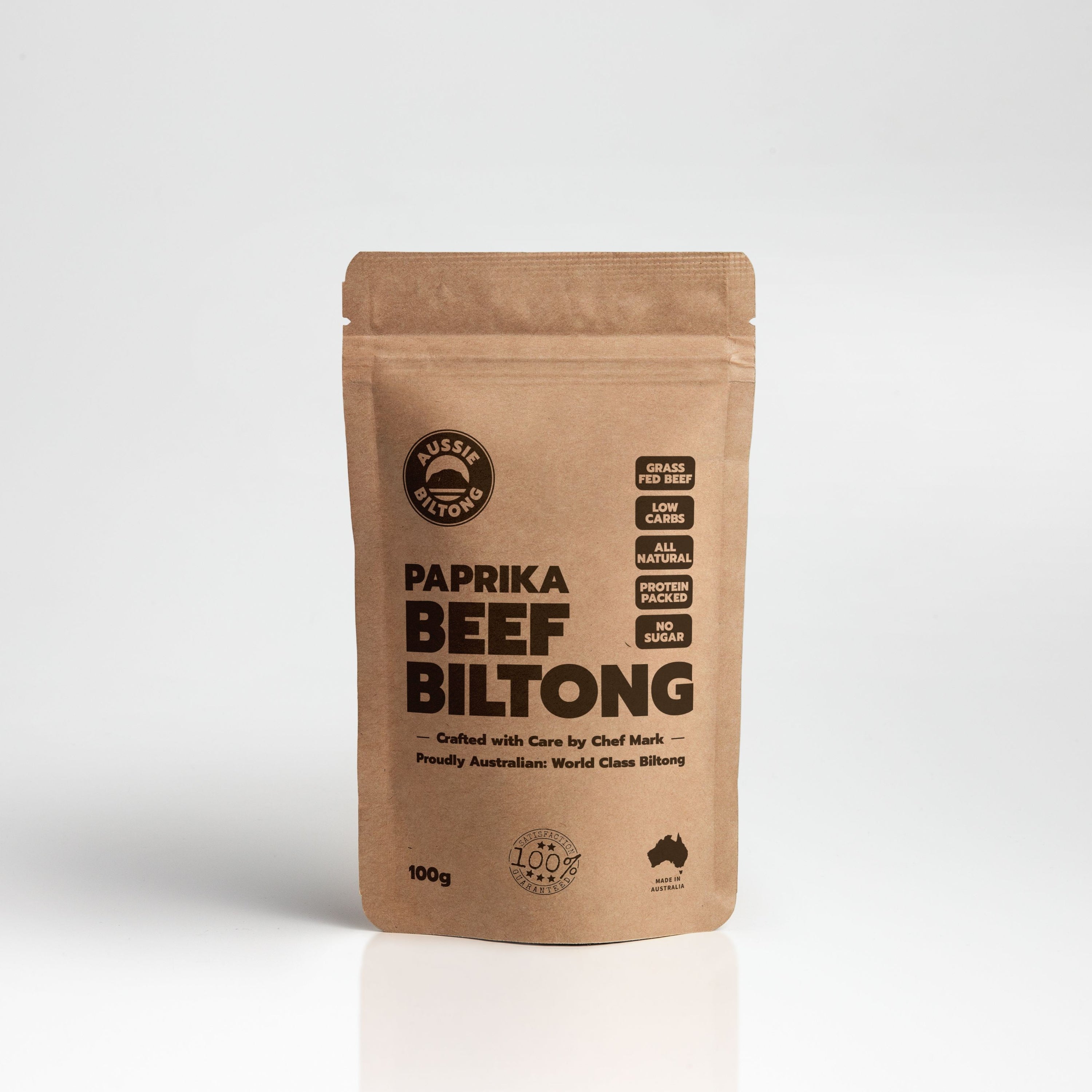


· By Aussie Biltong
The Ultimate High-Protein Snack: Why Biltong is Taking Over Work Lunches
Office lunches have changed. Many workers now want food that travels well, feels substantial, and does not leave them reaching for biscuits at three o’clock. That shift helps explain why biltong is getting more attention. Slow-dried beef snacks commonly deliver around 18 to 21 grams of protein in a single 40 to 45 gram pack, which makes biltong a compact and practical option for a busy workday. Protein-rich foods can also help with fullness, which matters when lunch is squeezed between meetings.
What is biltong, and why does it stand out?
Biltong is cured, seasoned meat that is slow-dried rather than cooked in the same way many jerky products are. The USDA distinguishes biltong from jerky. Biltong is slow-dried beef with simple seasoning blends such as vinegar, salt and spices. That gives it a more steak-like bite and a savoury flavour profile that many people find more lunch-friendly than sweeter snack foods.
Why biltong works so well at work
For an office setting, convenience matters almost as much as nutrition. Biltong earns its place because it covers both.
- It is easy to pack and does not need cutlery.
- It is shelf-stable when commercially packed and unopened, so it suits desk drawers and laptop bags.
- It offers a high protein hit in a small serving.
- It pairs well with fruit, wholegrain crackers, nuts or cheese if you need a more rounded lunch.
That is why biltong now sits comfortably among high-protein office snacks. It is not the only good choice, but it is one of the easiest to carry and eat without fuss. The practical side matters. A snack can look excellent on paper, yet still fail the office test if it leaks, melts, needs refrigeration straight away, or leaves a sugary aftertaste before the afternoon starts.
Biltong vs jerky: Which is better for the office?
Both biltong and jerky are meat snacks, both are portable, and both appeal to people trying to eat more protein. Still, they do not eat the same way.
Biltong is usually cured and slow-dried. Jerky is typically heat-dried and often marketed in flavours that lean smoky or sweet. That difference affects texture as much as taste.
Biltong often feels thicker and more tender. Jerky is usually chewier. For office workers, that small distinction can matter more than it sounds. A savoury, less sticky snack can feel closer to proper food and less like confectionery in disguise.
Where biltong sits among the best protein snacks
When people look for the best protein snacks for the workplace, they usually compare biltong with yoghurt, boiled eggs, protein bars and nuts. Each has strengths.
Yoghurt is useful but needs refrigeration.
Eggs are nutritious but less convenient to carry.
Protein bars are handy, though some are heavy on sweeteners or added sugars.
Nuts are simple, but they do not deliver the same protein density as dried beef.
Biltong sits in a useful middle ground: portable, savoury, and filling enough to bridge the gap between breakfast and dinner.
That said, balance still matters. Experts advise that you consume processed meat and red meat in moderation. Biltong can fit into a sensible lunch routine, though it should not crowd out fresher foods across the week.
Looking for a smarter way to stay satisfied through the workday? Explore Aussie Biltong’s range and find a protein-packed snack that fits easily into your lunch routine.