


· By Aussie Biltong
DIY Biltong: How to Make Perfect Aussie Slow-Dried Beef at Home
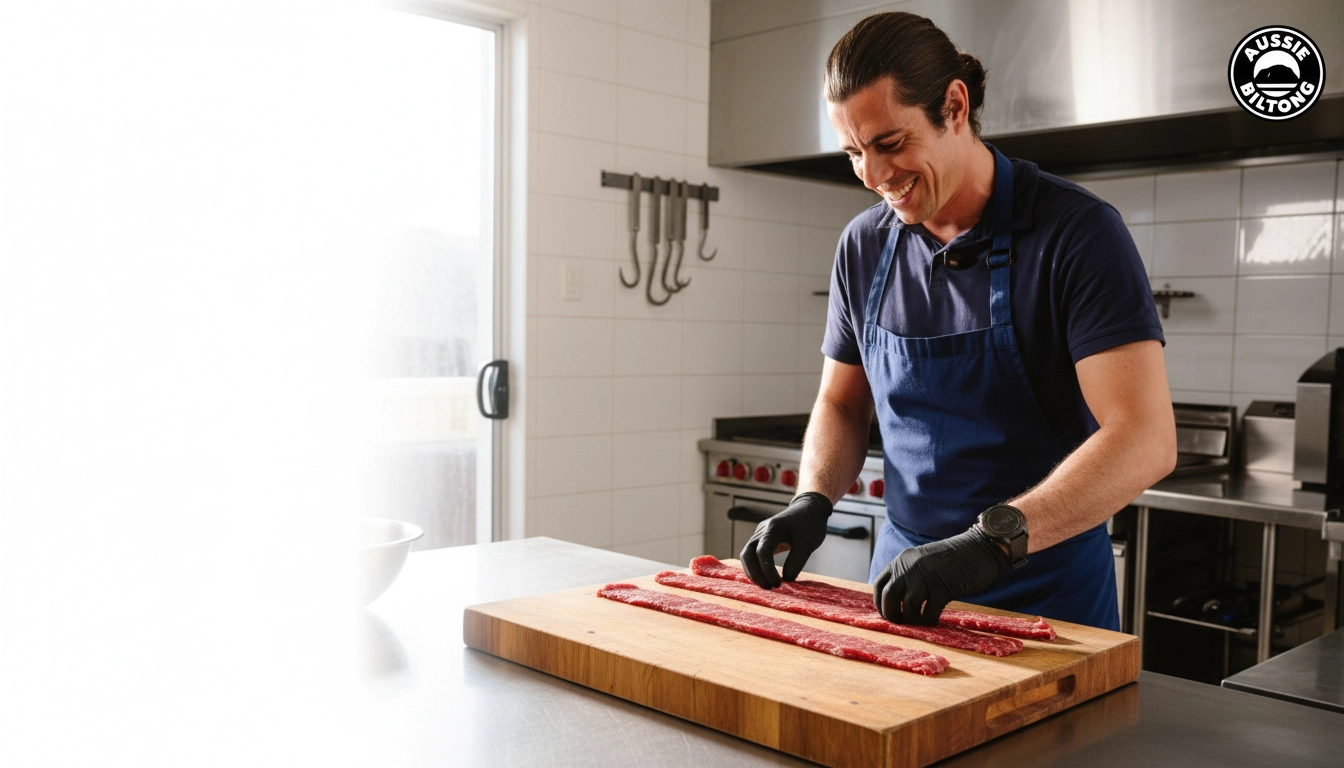
Want to make restaurant-quality biltong in your own kitchen? You're in for a treat. We're pulling back the curtain on Chef Mark's process, giving you the exact techniques that make our premium Australian beef biltong so bloody good.
Here's the truth: making exceptional biltong at home isn't rocket science, but it does require patience and the right approach. Stuff it up, and you'll end up with expensive beef jerky or worse, a mouldy mess. Get it right, and you'll have mates begging for your secret recipe.
Why Make Your Own Biltong?
Think store-bought biltong is your only option? Think again. When you make biltong at home, you control everything. The cut quality, the spice blend, the drying time. Plus, there's something deeply satisfying about transforming raw beef into this ancient preserved snack using nothing but salt, spices, and time.
Chef Mark trained in professional cookery after arriving from Slovakia and spent years in some of the country's most respected kitchens, including the one-hatted Galileo and the two-hatted Rockpool Bar & Grill. Today you're getting his approach for free.
The Foundation: Choosing Your Beef
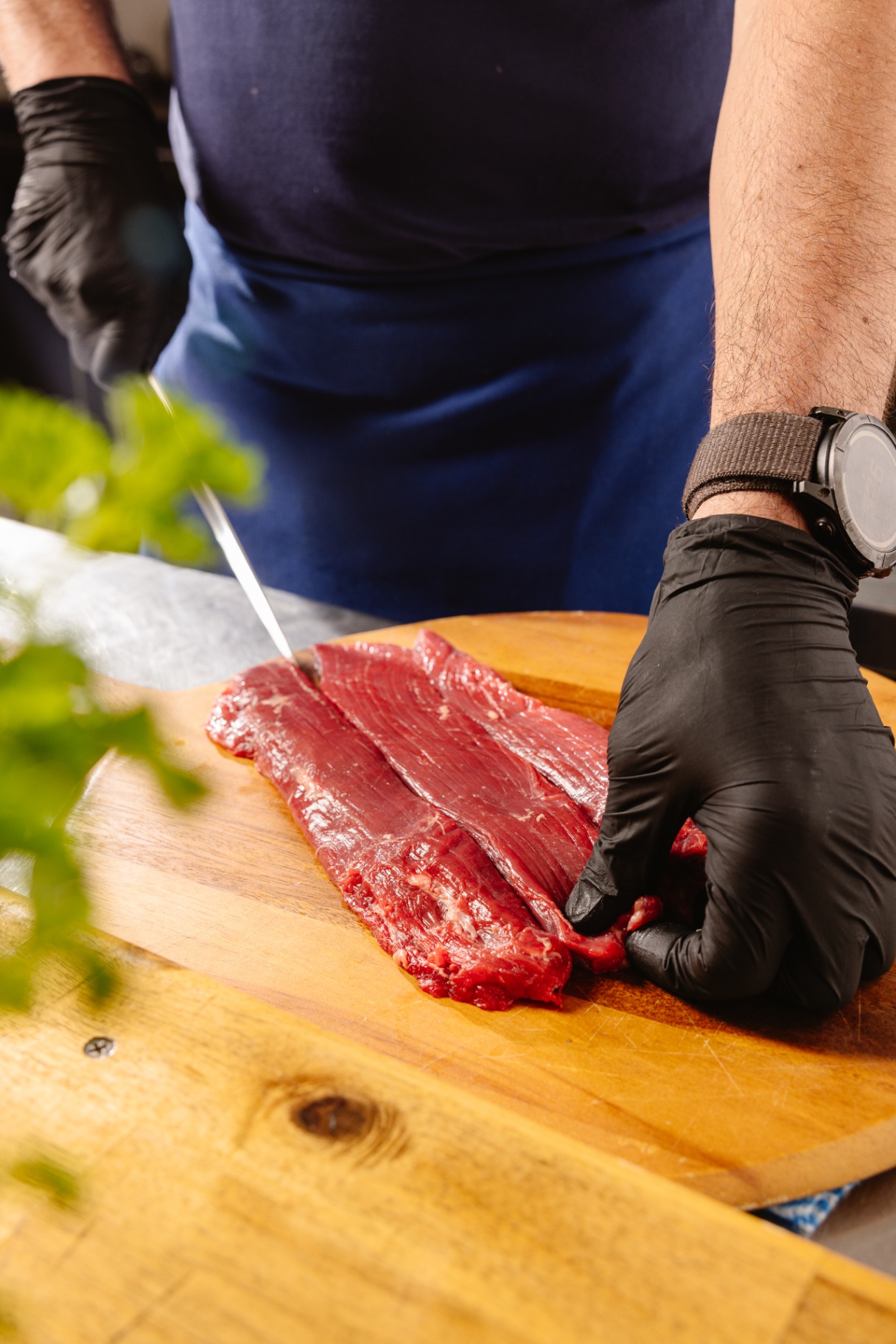
Your biltong is only as good as your beef. Period. Chef Mark swears by topside or silverside cuts from grass-fed Australian cattle. These cuts have the right balance of lean meat and structure that creates tender, flavourful biltong.
What to look for:
- Bright red colour with minimal gristle
- Even, lean muscle without heavy fat seams
- At least 2-3cm thick strips when cut
- Fresh, not frozen
Skip the eye fillet. Save your money. The leaner working cuts actually work better for biltong because they hold their structure during drying. More on this in our guide to choosing meat for biltong.
Chef Mark's Essential Ingredients
Here's what goes into the process, scaled for your home kitchen:
For 2kg of beef:
- 2kg topside or silverside, cut into 3cm strips
- 60ml red wine vinegar or apple cider vinegar
- 2 tablespoons coarse sea salt (non-iodised)
- 2 tablespoons coriander seeds, freshly ground
- 1 tablespoon black pepper, cracked
- 1 teaspoon paprika (optional, but recommended)
The secret weapon? Quality coriander seeds toasted and ground fresh. Coriander also carries natural antimicrobial oils, so it earns its place in the preservation system as well as the flavour.
Step 1: Prep Like a Pro

Cut your beef along the grain into strips about 3cm wide and 20cm long. This isn't sandwich meat we're making. Thick strips mean better texture and flavour concentration.
Pat each strip dry with paper towel, then sprinkle generously with coarse salt. Let it sit for 2 hours at room temperature. This draws out excess moisture, which is crucial for proper curing.
While your beef is salting, toast those coriander seeds in a dry pan until fragrant. Grind them coarsely. You want texture, not powder.
Step 2: The Marinade Magic
Mix your vinegar with the ground coriander, pepper, and paprika. This isn't just flavouring. The vinegar drops the surface pH of the meat to around 4.5, where most spoilage bacteria cannot grow. It's doing the job that sodium nitrite does in commercial jerky, without the chemistry.
Rinse the salt off your beef strips and pat dry. Now comes the fun part. Get your hands dirty and massage that spice mix into every surface of the meat. Really work it in.
Cover and refrigerate for 24 hours minimum. 48 hours is even better if you can wait.
Step 3: The Drying Setup
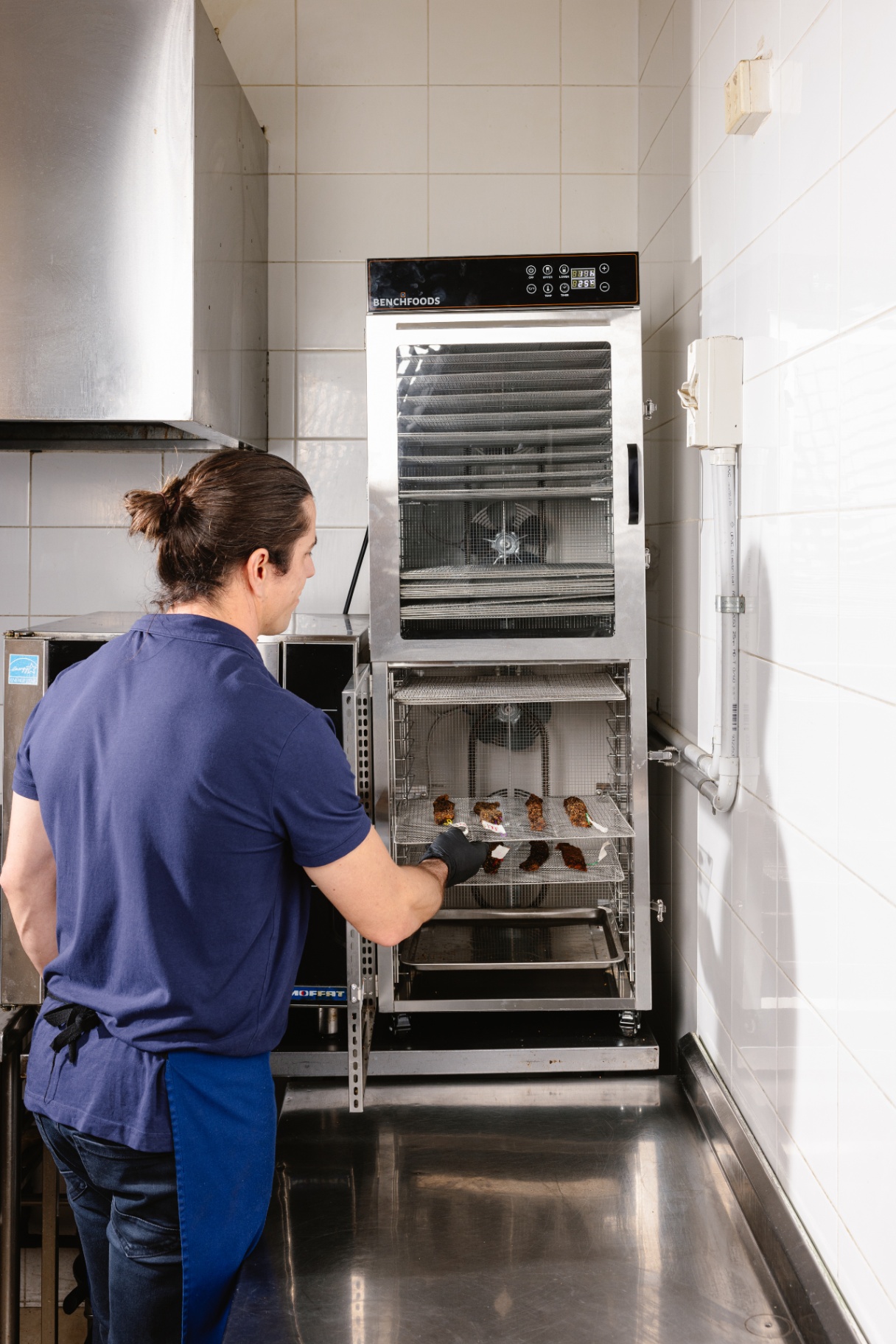
Here's where most home attempts fail. Temperature control and airflow are everything. Real biltong is slow-dried, never cooked, so you want consistent temperatures around 20-25°C and gentle, continuous air circulation.
Option 1: DIY Fan Setup (Best Result)
Hang strips from a wooden rack with a small fan creating gentle airflow, somewhere cool, dark and dry. Flip them every few hours so they dry evenly. This is the closest a home setup gets to proper slow-drying, and it's what we'd recommend if you want actual biltong rather than something jerky-adjacent.
Option 2: Biltong Box
A purpose-built box with a low-wattage globe and a fan holds temperature and airflow far more reliably than an open rack. Worth building if you plan to make biltong more than once.
Option 3: Dehydrator (Fastest, Not Truly Biltong)
Set as low as your unit goes and keep it there. Be aware that most household dehydrators run at 55-70°C, which cooks the meat rather than curing it. You'll get an edible, tasty result in 12-24 hours, but the texture will be closer to jerky. Heat is the shortcut, and the texture is what you pay for it.
Step 4: Patience Pays Off
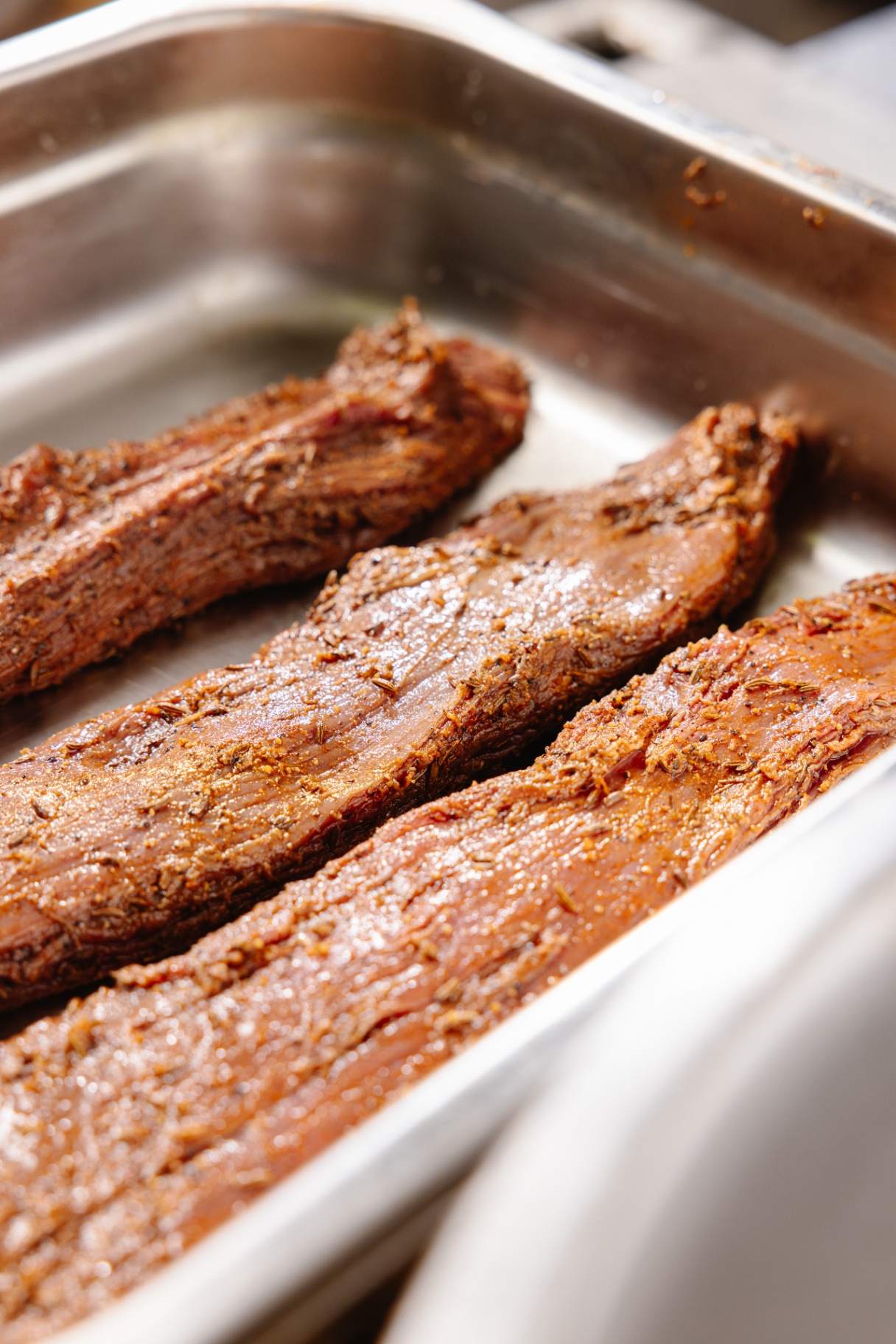
This is where discipline matters. Check your biltong daily, but resist the urge to speed things up with higher heat. Good biltong can't be rushed.
You'll know it's ready when:
- It feels firm but slightly flexible
- The outside has developed a darker crust
- It doesn't leave moisture on your fingers when squeezed
Depending on your setup and local humidity, expect anywhere from 5 days to two weeks. There's no fixed number, and that's not us being vague. Airflow direction and intensity change how quickly moisture leaves the meat, so two batches hung on the same day can finish days apart. It's done when it's done.
For reference, our own batches run 7 to 14 days in a temperature and humidity controlled cabinet, flipped every few hours and judged by hand rather than by clock.
The Final Test: Slicing and Tasting
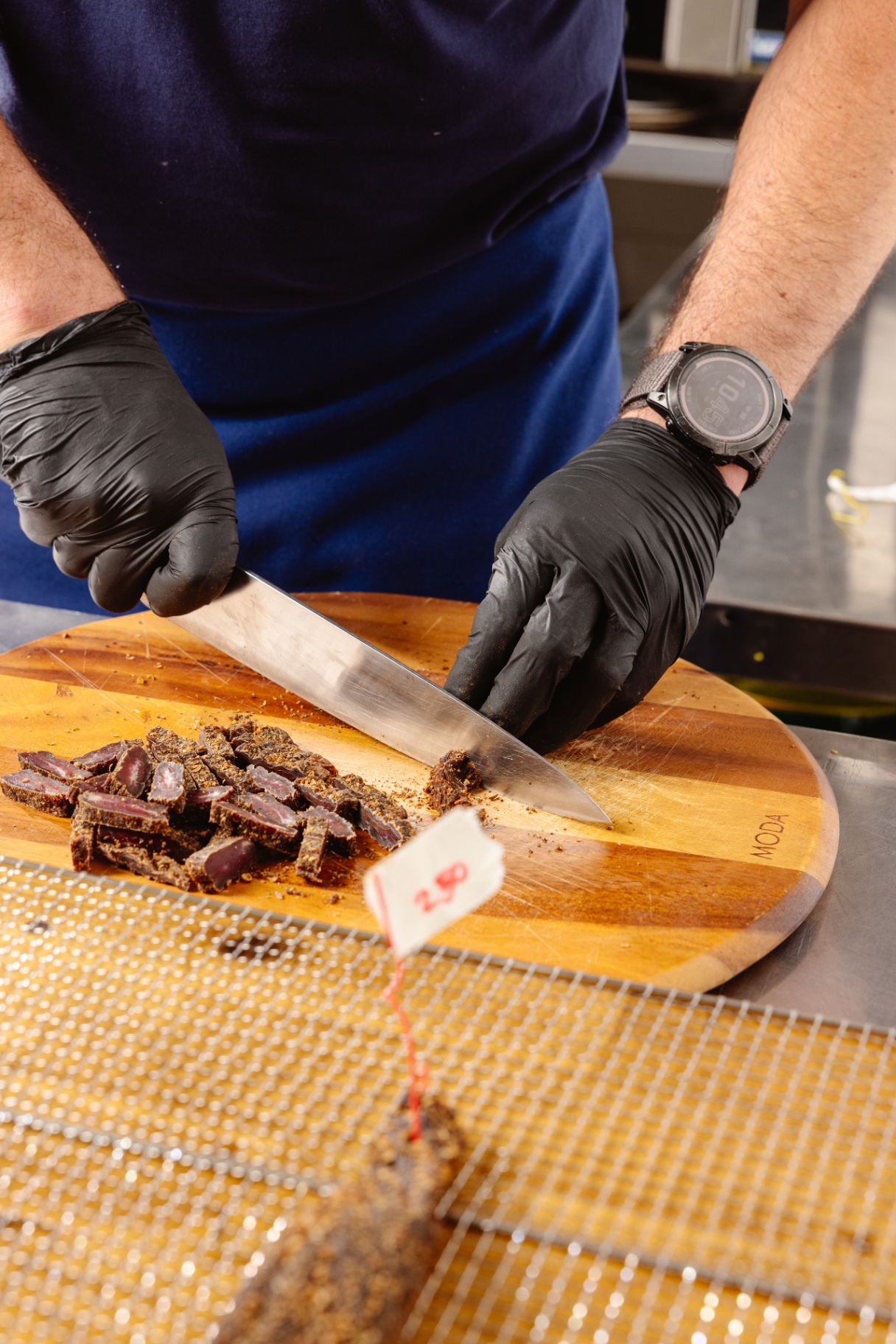
Your first slice tells the story. Good homemade biltong should have a slight give when you bite into it, with concentrated beef flavour and a balanced spice coating.
Slice across the grain for easier chewing, or with the grain if you prefer a more substantial chew.
Storing Your Homemade Treasure
Properly made biltong keeps for weeks at room temperature in a container that breathes, like a paper bag or a loosely covered jar. Sealed plastic traps residual moisture against the surface, which is the most common cause of home-made biltong going mouldy. In humid climates, store it in the fridge in paper. Full detail in our guide to how to store biltong.
How Does Your DIY Stack Up?
Making biltong at home is genuinely rewarding, and we'd rather you tried it than not. But it's worth being honest about the trade-off before you commit a couple of kilos of good beef to it.
You're looking at roughly a week to two weeks of drying, a setup that holds temperature and airflow steady, flipping the strips every few hours, and usually a few failed batches before the texture comes right. Get the airflow wrong and you'll find mould. Get impatient and reach for heat and you'll have made jerky.
That's the honest version. Some people love the process and never buy biltong again. Others do it once, respect the craft, and decide their weekends are worth more than the saving.
Pro Tips from Chef Mark's Kitchen
- Room temperature matters: cold meat doesn't absorb spices properly
- Don't rush the cure: 24 hours minimum, 48 hours is better
- Airflow beats heat: gentle circulation trumps high temperatures every time
- Flip it: every few hours, so it dries evenly rather than case-hardening on one side
- Trust the process: good biltong takes time, period
Want to compare your homemade results against the benchmark? Try our Original Beef Biltong or Paprika and see how your kitchen creation measures up.
Ours is made in Sydney by Chef Mark from Australian grass-fed topside, slow-dried 7 to 14 days, five ingredients, no sugar and no preservatives. Sizes from 100g to 2kg, all in resealable 250g pouches. Free express delivery Australia-wide on orders over $150.
Every one-off order gets 5% off automatically. Subscribe and it's 10% off every order for as long as you stay, with no obligation and cancel anytime. And if you're not 100% satisfied, we offer a 100% money-back guarantee.
Whether your DIY batch turns out perfect or needs some tweaking, you'll have gained real respect for this time-honoured craft. And if all else fails, we'll be here with ours ready to ship straight to your door.